Why Skills Now Matter More Than Grades
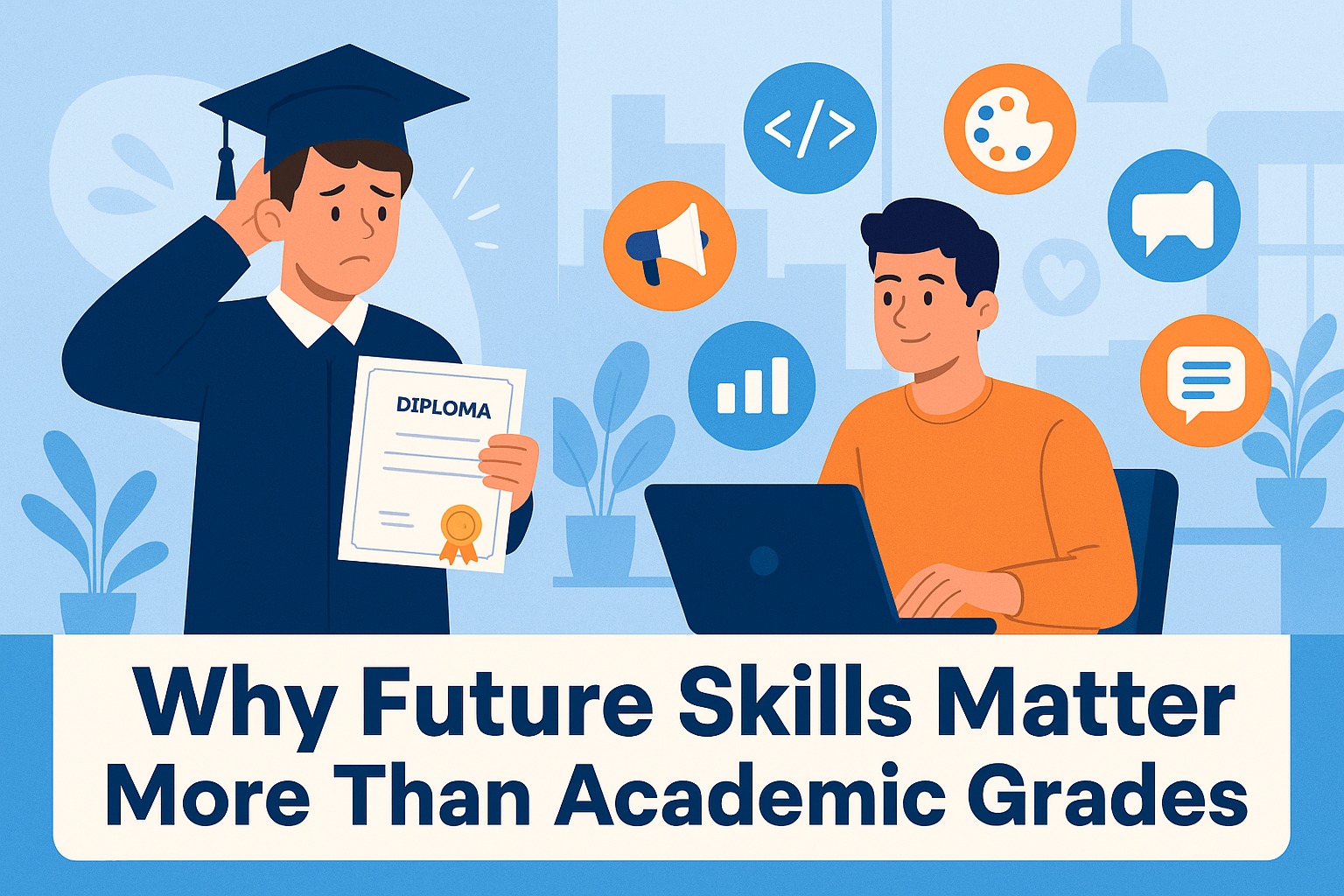
The New 2026 Scholarship Trend: Why Skills Now Matter More Than Grades.
The Changing Face of Scholarships:Scholarship trend 2026: skills matter more than grades
In the past, scholarships were awarded primarily based on one thing: academic excellence. Students with the highest grades, the best test scores, and an almost flawless transcript were the ones who dominated the global scholarship landscape. Scholarship trend 2026: skills matter more than grades
However, as we move toward 2026, a remarkable shift is taking place in how universities, governments, and private foundations define merit. A new scholarship trend has emerged where skills now matter more than grades. While academic performance still plays a role, organizations are increasingly prioritizing real-world competencies such as leadership, problem-solving, digital literacy, entrepreneurship, and creativity.
This trend reflects broader changes in education and the job market. Employers today are less interested in memorization and standardized scores and more focused on whether a candidate can apply knowledge in practical ways.
Similarly, scholarship providers have realized that investing in skilled individuals produces greater long-term impact than simply funding students with high marks but limited hands-on abilities.
In fact, several high-profile programs such as the Chevening Scholarships (UK), Fulbright Program (USA), and Erasmus+ (Europe) have started adjusting their evaluation criteria to weigh leadership potential, extracurricular achievements, and digital innovation just as heavily—if not more—than GPA.
This shift is particularly beneficial for students from non-traditional backgrounds, including those who may not have stellar academic records but possess entrepreneurial drive, community engagement skills, or technical expertise.
This article explores why this new 2026 scholarship trend is taking hold, how students can position themselves for success, what types of skills are now in demand, and where to find scholarships that reward talent, not just grades. By understanding this evolution, you’ll not only increase your chances of securing funding but also future-proof your career.
Why Skills Are Becoming More Valuable Than Grades
The global economy is undergoing rapid transformation, driven by artificial intelligence, remote work, climate change, and digital entrepreneurship. These shifts demand a workforce equipped with skills that go far beyond traditional academics.
As a result, scholarship providers are rethinking their criteria, moving away from GPA-only selection toward a holistic evaluation process.
Grades measure how well a student performs in exams, but they don’t always reflect adaptability, problem-solving, or innovation. A student who can design a mobile app that solves a community problem, launch a social impact startup, or lead a sustainability campaign may have a more significant long-term impact than one who simply graduates with honors but no practical experience.
This is why scholarships that cover flight tickets and living expenses, like those offered by DAAD (Germany) and Australia Awards, are now requiring applicants to demonstrate skills in leadership, entrepreneurship, and innovation.
Another reason is inclusivity. Relying solely on grades often favors students from privileged backgrounds with access to better schools, tutors, and learning resources.
By valuing skills, scholarship providers create opportunities for talented students from disadvantaged backgrounds, leveling the playing field. A young innovator from Nigeria who built a low-cost irrigation tool for farmers may now stand an equal chance against a straight-A student from Europe.
Additionally, international organizations are aligning scholarships with the United Nations Sustainable Development Goals (SDGs). These goals emphasize solutions-driven education, entrepreneurship, and community action, all of which rely more on applied skills than academic results.
By 2026, students will increasingly win scholarships not because they can memorize information but because they can transform knowledge into action.
📌: To explore guides on scholarships where grades aren’t the only deciding factor, visit travel.scholarshipntoday.com.
Types of Skills Scholarship Committees Now Prioritize
To succeed in this evolving landscape, students must understand the skills that scholarship committees value most in 2026. While the specific requirements vary by program, there are consistent themes across global funding opportunities.
-
Leadership and Initiative: Committees are looking for students who don’t just follow but take charge. Leadership may be demonstrated through community service, founding a student organization, leading projects, or creating impactful campaigns.
-
Entrepreneurial and Innovation Skills: With global challenges like unemployment and climate change, entrepreneurial thinkers who can launch startups, innovate technologies, or develop social enterprises are highly valued.
-
Digital and Tech Skills: From coding to digital marketing and AI literacy, technical skills now play a huge role. Programs like Erasmus+ have introduced training-focused scholarships for digital competence, while others encourage projects in blockchain, fintech, and cybersecurity.
-
Problem-Solving and Critical Thinking: Instead of memorizing facts, students who can identify problems and propose solutions are considered strong candidates. For example, a student who created a waste recycling solution in their town could be more attractive than one with a perfect GPA.
-
Cross-Cultural Competence: Many scholarships involve studying abroad, so adaptability, open-mindedness, and cultural intelligence are critical. Committees look for evidence of intercultural experiences, volunteering, or language skills.
-
Communication and Collaboration: Whether through essays, interviews, or group tasks, strong communication skills remain key. The ability to collaborate effectively across teams and cultures is increasingly valued.
By aligning with these skills, students can craft winning applications that emphasize action, creativity, and leadership rather than just grades.
📌 reference: The World Economic Forum lists future work skills that align with what scholarship programs now emphasize.
Scholarship trend 2026: skills matter more than grades
How to Build a Strong Scholarship Application in 2026
Knowing that skills now outweigh grades, the question is: how can you showcase your abilities in a scholarship application? The first step is to carefully review the eligibility criteria. While some scholarships like Fulbright or DAAD still ask for academic transcripts, they also require essays, project proposals, or leadership portfolios.
This means your ability to tell a compelling story about your skills and impact is more important than a 4.0 GPA.
Applicants should focus on crafting a powerful personal statement that highlights their real-world experiences. Instead of saying, “I had high grades in mathematics,” it’s stronger to explain how you applied mathematical knowledge to solve a community problem, such as optimizing water distribution in rural areas. Evidence-based storytelling always wins.
Another strategy is to develop a portfolio of skills and achievements. For instance, tech-driven applicants may create a GitHub repository, publish research papers, or share prototypes of digital products. Those with leadership backgrounds might showcase community initiatives, event leadership, or entrepreneurship ventures. Committees prefer tangible results over abstract claims.
Networking also plays a big role. Engaging with university professors, scholarship alumni, or mentors can help applicants tailor their submissions. Many scholarship websites, such as DAAD or Chevening, even organize webinars where applicants can interact with past recipients. Taking advantage of these resources shows initiative and builds credibility.
Finally, students must ensure they meet all documentation requirements, such as transcripts, reference letters, proof of language proficiency, and project proposals. Missing even one document can disqualify an otherwise excellent application. Attention to detail, combined with a skills-driven narrative, is the ultimate formula for success in 2026.
Where to Find Scholarships That Value Skills Over Grades
With this shift, students need to know where to look for scholarships that emphasize skills. Fortunately, several platforms and universities have already adapted to this trend.
-
Chevening Scholarships (UK): Focus heavily on leadership and networking skills. GPA is secondary to professional achievements and community impact.
-
Fulbright Program (USA): Prioritizes leadership potential, cultural exchange experience, and innovative ideas.
-
DAAD (Germany): Increasingly values practical skills, research proposals, and entrepreneurship.
-
Erasmus+ (Europe): Offers skill-building exchanges and rewards students who show adaptability and digital innovation.
-
Australia Awards: Known for supporting students from developing nations with leadership and community engagement backgrounds.
-
Gates Cambridge Scholarships (UK): Emphasize intellectual creativity, leadership, and real-world impact projects.
Students can explore these opportunities directly on their official websites or through trusted portals.
📌 links:
📌 : For a step-by-step breakdown of preparing winning applications, visit travel.scholarshipntoday.com.
Scholarship trend 2026: skills matter more than grades
Conclusion: A Skills-First Future for Scholarships
The 2026 scholarship trend makes one thing clear: skills now matter more than grades. This shift is not about diminishing the importance of academic excellence but about broadening the definition of merit. In a world driven by innovation, technology, and problem-solving, students who can demonstrate adaptability, creativity, leadership, and impact are the ones who will stand out.
For aspiring scholars, this means focusing less on chasing perfect grades and more on building transferable skills. Volunteer in your community, learn digital tools, launch small initiatives, or contribute to research projects. These experiences not only strengthen your scholarship application but also prepare you for global careers.
As the job market evolves, so too must the education system. Scholarships are no longer just rewards for high scores—they are investments in people who can change the world. By understanding and embracing this shift, students can unlock opportunities to study abroad with full funding and create meaningful impact on a global scale.
📌 To stay updated with trending scholarships that reward skills, not just grades, bookmark travel.scholarshipntoday.com.