
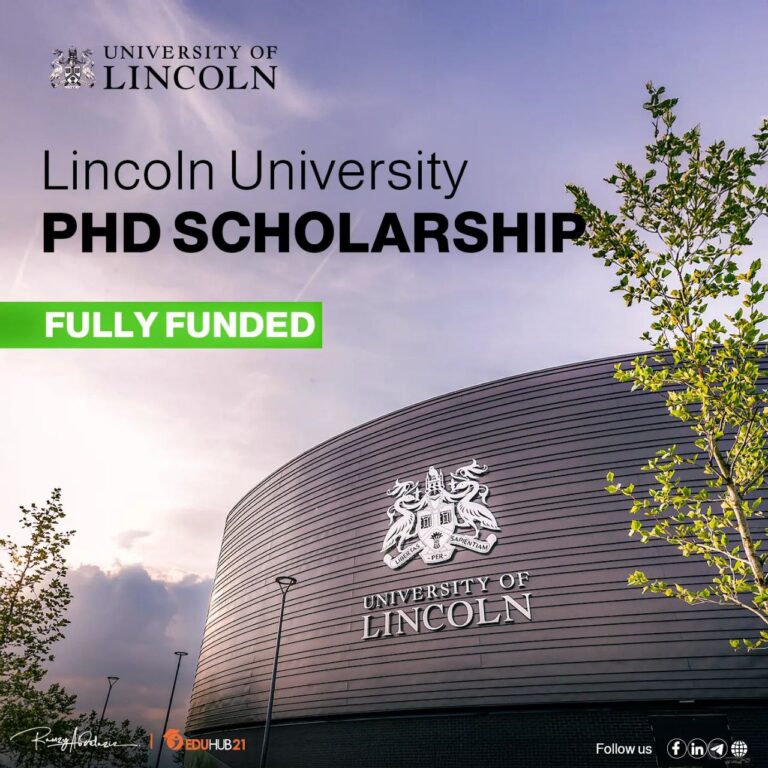
Lincoln University Scholarships 2025 in New Zealand | Fully Funded
Why Apply for the Lincoln University Scholarships 2025?
The Lincoln University Scholarships 2025 in New Zealand are an incredible opportunity for ambitious international students who want to study in one of the most beautiful and academically advanced countries in the world. These scholarships are fully funded, meaning they cover not only tuition fees but also living expenses, research allowances, and in some cases travel costs.
What makes these scholarships even more attractive is that they are open across all major academic categories—from Bachelor’s programs to Master’s degrees, PhD studies, and even Postdoctoral research opportunities. This inclusivity ensures that students at different stages of their academic journeys can benefit from the financial support and academic prestige that Lincoln University offers.
Lincoln University, located near Christchurch, is New Zealand’s specialist land-based university, globally recognized for its teaching and research in agriculture, environmental management, business, and science. By receiving a fully funded scholarship here, international students not only get a chance to study in a top-ranked institution but also to live in New Zealand, a country admired for its high standard of living, welcoming communities, and breathtaking natural beauty.
The Lincoln University Scholarships 2025 provide more than just financial support; they offer life-changing experiences. Scholars are encouraged to join cutting-edge research projects, engage with local and international industries, and build professional networks that can help them launch successful careers.
Compared to other scholarship schemes like the Chevening Scholarships in the UK (outbound link), Lincoln University’s funding program offers more tailored academic and research pathways for students in specialized fields. For updates on other global funding options, check out our Scholarships Today portal (inbound link), which regularly features international opportunities.
Scholarship Coverage and Benefits of Lincoln University Scholarships 2025
One of the most attractive features of the Lincoln University Scholarships 2025 in New Zealand is the extent of their coverage. These scholarships are designed to remove the financial barriers that many international students face, allowing them to fully focus on their studies and research. For undergraduate students, the scholarships typically cover full tuition fees throughout the duration of their Bachelor’s program, along with support for essential academic materials. Master’s students receive funding that not only covers tuition but also includes living stipends, which can help with accommodation, food, and transportation costs in New Zealand.
For those pursuing a PhD or Postdoctoral degree, the scholarships go even further by including research grants and allowances that support laboratory work, fieldwork, and access to specialized resources. Additionally, Postdoctoral fellows benefit from enhanced financial packages that allow them to collaborate with leading academics on innovative research. Scholars at this level also gain international exposure through conferences and exchange programs, making Lincoln University a hub for career and research advancement.
The scholarships may also include health insurance, ensuring that all international students have medical coverage during their studies. This is particularly important for those moving far from home, providing peace of mind and security. Another key advantage is the internship and industry linkages offered by Lincoln University. Many scholarship recipients have opportunities to work with companies, government organizations, and research centers, making them highly employable after graduation.
Compared to other regional opportunities like the University of Melbourne Scholarships in Australia (outbound link), the Lincoln University Scholarships 2025 provide more specialized funding streams that directly target land-based sciences, agriculture, and sustainability. These scholarships therefore make it possible to study in New Zealand for free, while gaining both academic and career-oriented advantages.
Eligibility Criteria and Application Requirements
The Lincoln University Scholarships 2025 are highly competitive, and as such, they have specific eligibility requirements to ensure fairness and quality among applicants. The scholarships are open to international students from all nationalities, as well as domestic students who demonstrate exceptional academic merit. Depending on the program—Bachelor’s, Master’s, PhD, or Postdoc—the eligibility criteria vary slightly.
For Bachelor’s scholarships, applicants must hold a recognized secondary school certificate with excellent academic performance. Strong grades in relevant subjects like science, mathematics, or humanities are essential depending on the chosen field of study. For Master’s scholarships, candidates are required to have an accredited undergraduate degree in a related discipline, with a minimum GPA or equivalent academic achievement. Research proposals may also be needed for thesis-based Master’s programs.
PhD and Postdoctoral applicants face more rigorous requirements. A PhD applicant must have a relevant Master’s degree, alongside a strong research proposal aligned with Lincoln University’s research priorities in agriculture, sustainability, food security, or environmental science. Postdoctoral applicants, on the other hand, must demonstrate significant research achievements, including published papers, prior projects, and the ability to contribute to ongoing faculty research.
In addition to academic qualifications, language proficiency is a key requirement. Most programs at Lincoln University are taught in English, so applicants must demonstrate proficiency through standardized tests such as IELTS or TOEFL. For applicants from non-English-speaking countries, providing proof of English language ability is mandatory.
Applicants also need to prepare documents such as academic transcripts, recommendation letters, a statement of purpose, and a CV or resume. Deadlines for applications vary by program, but students aiming for the 2025 intake are strongly encouraged to apply early. For detailed tips on preparing scholarship applications, you can visit our scholarship application guides .
Academic and Cultural Advantages of Studying in New Zealand
Studying in New Zealand provides an academic experience that goes beyond classrooms and laboratories. The Lincoln University Scholarships 2025 allow students to immerse themselves in a world-class education system while benefiting from the unique culture and environment of New Zealand. Known for its breathtaking landscapes, from snow-capped mountains to pristine beaches, New Zealand provides a healthy and inspiring backdrop for students who want a balance between academic rigor and quality of life.
Academically, Lincoln University has established itself as a global leader in agriculture, environmental management, food security, and sustainability. The university places a strong emphasis on hands-on learning, giving students real-world experience through research projects, internships, and industry collaborations. This approach ensures that graduates are not only knowledgeable but also job-ready. For example, PhD and Postdoctoral scholars at Lincoln often work directly on projects that address global challenges such as climate change, renewable energy, and sustainable farming.
The multicultural environment of New Zealand is another advantage. Students from Asia, Africa, Europe, and the Americas all come together in a welcoming academic community. This diversity encourages cross-cultural collaboration, idea-sharing, and lifelong friendships. Moreover, since New Zealand is an English-speaking country, students also improve their English proficiency while engaging in academic and social activities.
Professionally, studying in New Zealand opens doors to global job markets. Graduates often find opportunities in international organizations, NGOs, government institutions, and global corporations. Many students also qualify for post-study work visas, allowing them to gain practical work experience in New Zealand after graduation. This career pathway is a major incentive for applying to scholarships like the Lincoln University Scholarships 2025. For students exploring other similar opportunities, the University of Otago Scholarships are also a great option for studying in New Zealand.
How to Apply for Lincoln University Scholarships 2025
The application process for Lincoln University Scholarships 2025 is straightforward but requires careful attention to detail. The first step is to visit the official Lincoln University scholarships page, where applicants can find up-to-date information about available funding programs, eligibility requirements, and deadlines. Each scholarship may have its own application form, so it is important to choose the right one for your level of study (Bachelor’s, Master’s, PhD, or Postdoc).
Applicants must create an online application account on the Lincoln University system and complete the required details accurately. Required documents such as academic transcripts, letters of recommendation, a CV, and proof of English language proficiency must be uploaded in the specified format. PhD and Postdoc applicants will also need to submit detailed research proposals, outlining their academic goals and research objectives.
Once the application is submitted, it undergoes a review process by the admissions and scholarship committees. Shortlisted candidates may be invited for an online interview to assess their motivation, academic background, and suitability for the scholarship. Successful applicants will be notified through official email and offered a scholarship package detailing coverage of tuition, living expenses, and research allowances.
To maximize your chances, it is essential to apply well before the deadline and ensure all documents meet the university’s requirements. Applicants should also prepare a compelling motivation letter that reflects their passion, leadership qualities, and academic goals. For step-by-step help, you can refer to our detailed scholarship application success guide.